Site enhancements
Entry upgrades, underperforming beds, visibility, screening, circulation, seating edges, and phased capital improvements.
Landscape improvements and planned care for offices, associations, retail edges, and managed properties—organized around presentation, access, durability, and communication.
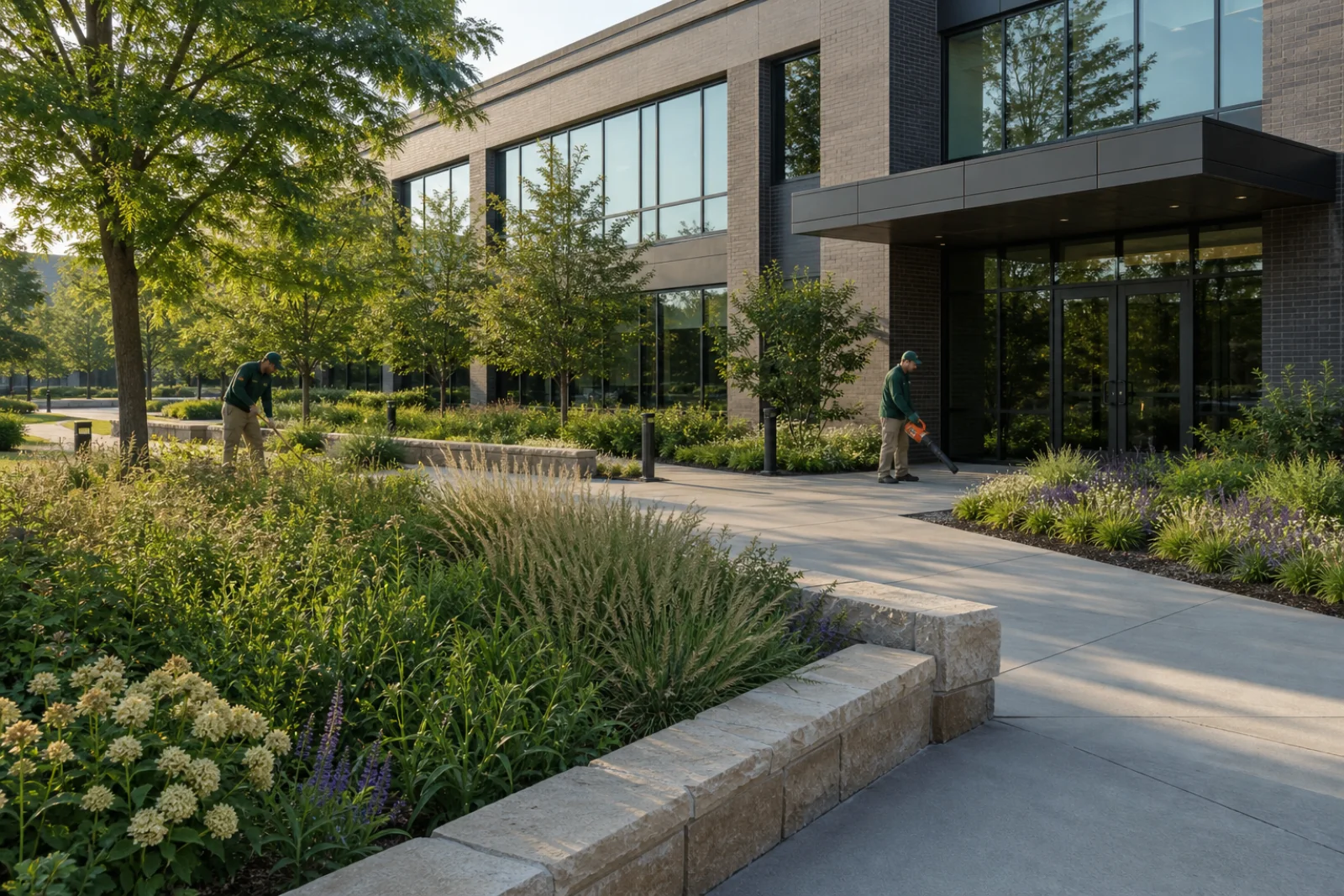
A commercial landscape has audiences, access constraints, seasonal deadlines, maintenance realities, budgets, and approval chains. Expanded site content can speak directly to those decisions.
Entry upgrades, underperforming beds, visibility, screening, circulation, seating edges, and phased capital improvements.
Planting, soil preparation, defined edges, hardscape elements, drainage relationships, and establishment planning.
Spring reset, selective pruning, targeted color, autumn transition, and winter structure around property priorities.
Common-area improvements, board-ready priorities, resident communication needs, and multi-year phasing.
Clear walks, durable planting, visible entries, and intentional first impressions across seasons.
A real provider would define contacts, visit cadence, issue escalation, documentation, and service boundaries.
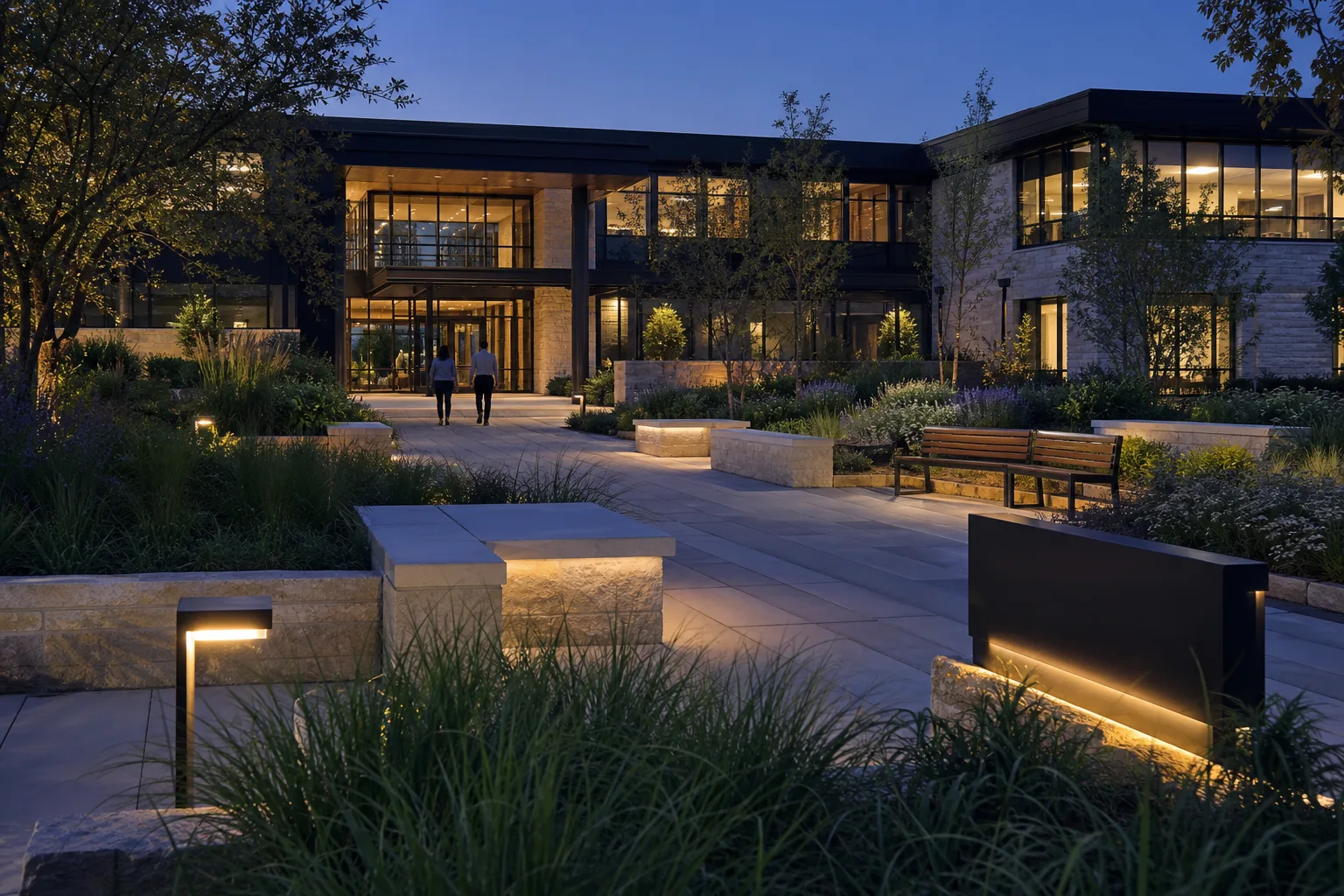
Lighting, clear walks, visible entrances, durable planting, and orderly edges shape confidence throughout the day.
Commercial landscape planning should also account for service access, tenant movement, seasonal deadlines, snow relationships, visibility, irrigation, drainage, and who approves changes.

Expanded content helps managers decide whether the service model matches the property and internal approval process.
A real proposal should define access, staging, noise, closures, safety controls, communication, and acceptable work windows.
Priority zones, visual standards, approval dates, budgets, procurement, irrigation, and replacement responsibility should be agreed in advance.
Potentially, but multi-location standards, travel, reporting, billing, site contacts, and exceptions increase scope beyond a single-property website example.
No. It demonstrates how a real firm could explain commercial service without inventing staff, equipment, credentials, or outcomes.