Observe movement
Where water enters, concentrates, slows, ponds, crosses walks, reaches structures, or leaves the property.
Read the grade, roof discharge, soil, paving, neighboring conditions, low points, and planting together before choosing a landscape response.
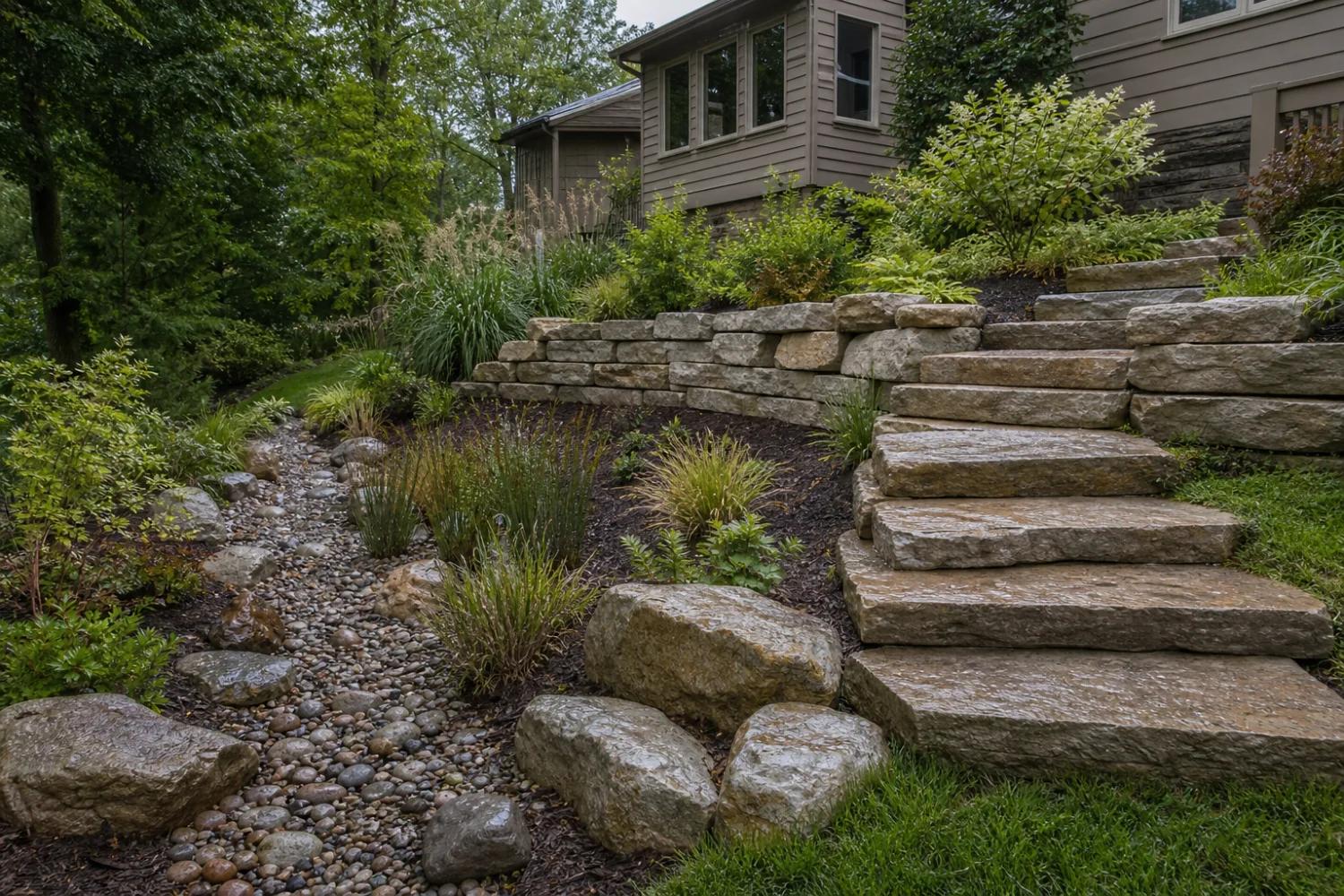
A shallow swale, rain garden, retaining strategy, surface regrading, downspout relationship, or combination may fit—but real diagnosis comes before solution language.
See the Rain Garden Walk →Where water enters, concentrates, slows, ponds, crosses walks, reaches structures, or leaves the property.
Slopes, thresholds, steps, walls, beds, paving, lawns, and accessible circulation considered together.
Site-appropriate rain-garden and swale concepts when soils, space, overflow, and local rules support them.
Foundation concerns and building water require qualified assessment beyond ordinary landscape observation.
Drainage changes should not simply move a problem across a property line.
Engineering, surveying, utility, municipal, and specialized drainage work may be required.
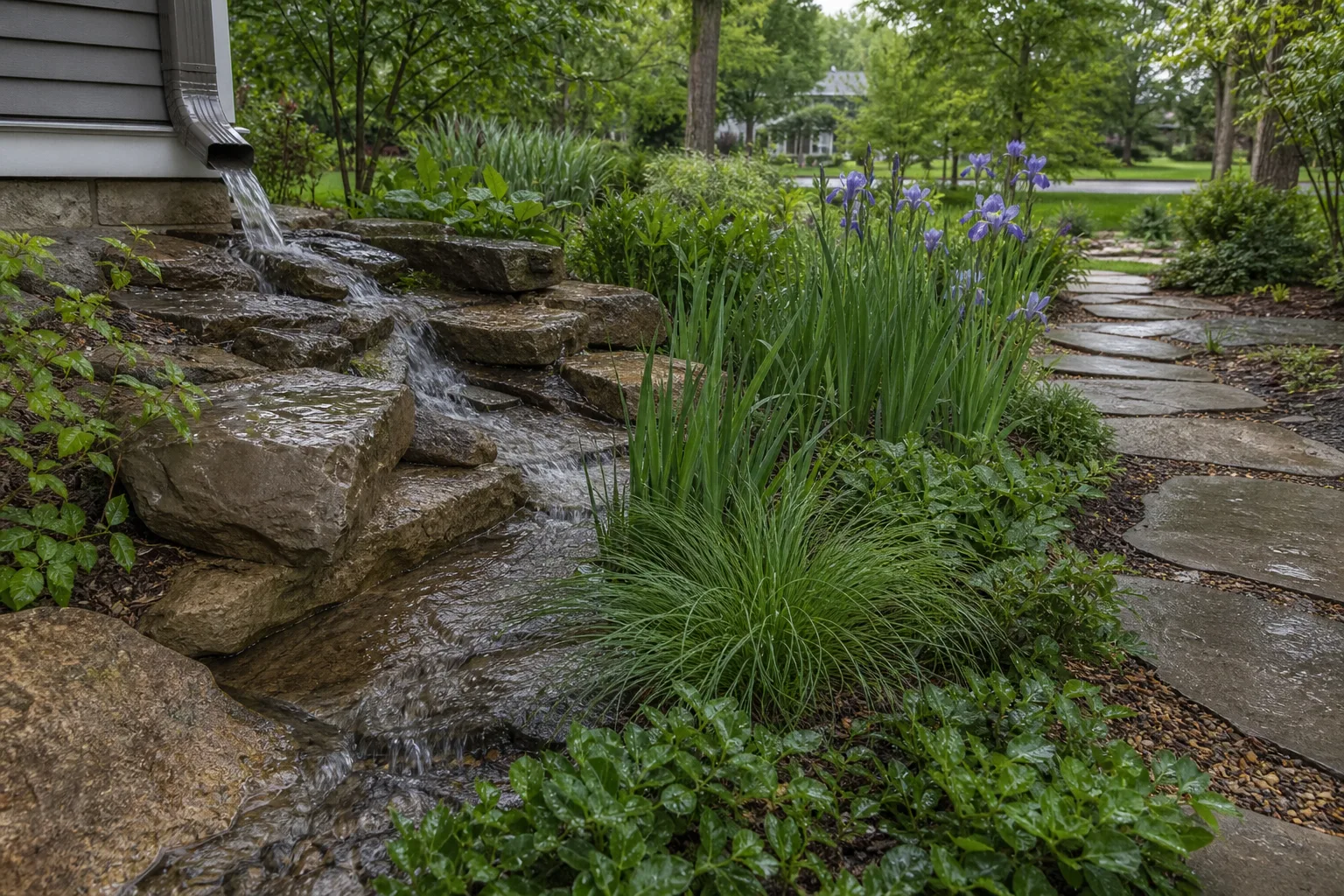
Landscape-led solutions may be part of the answer, but structures, flooding, property boundaries, and complex sites can require engineers, drainage specialists, surveyors, or other qualified professionals.
Timing, source, volume, soil saturation, high and low points, blocked paths, downspouts, neighboring runoff, and building relationships all help define the real question.
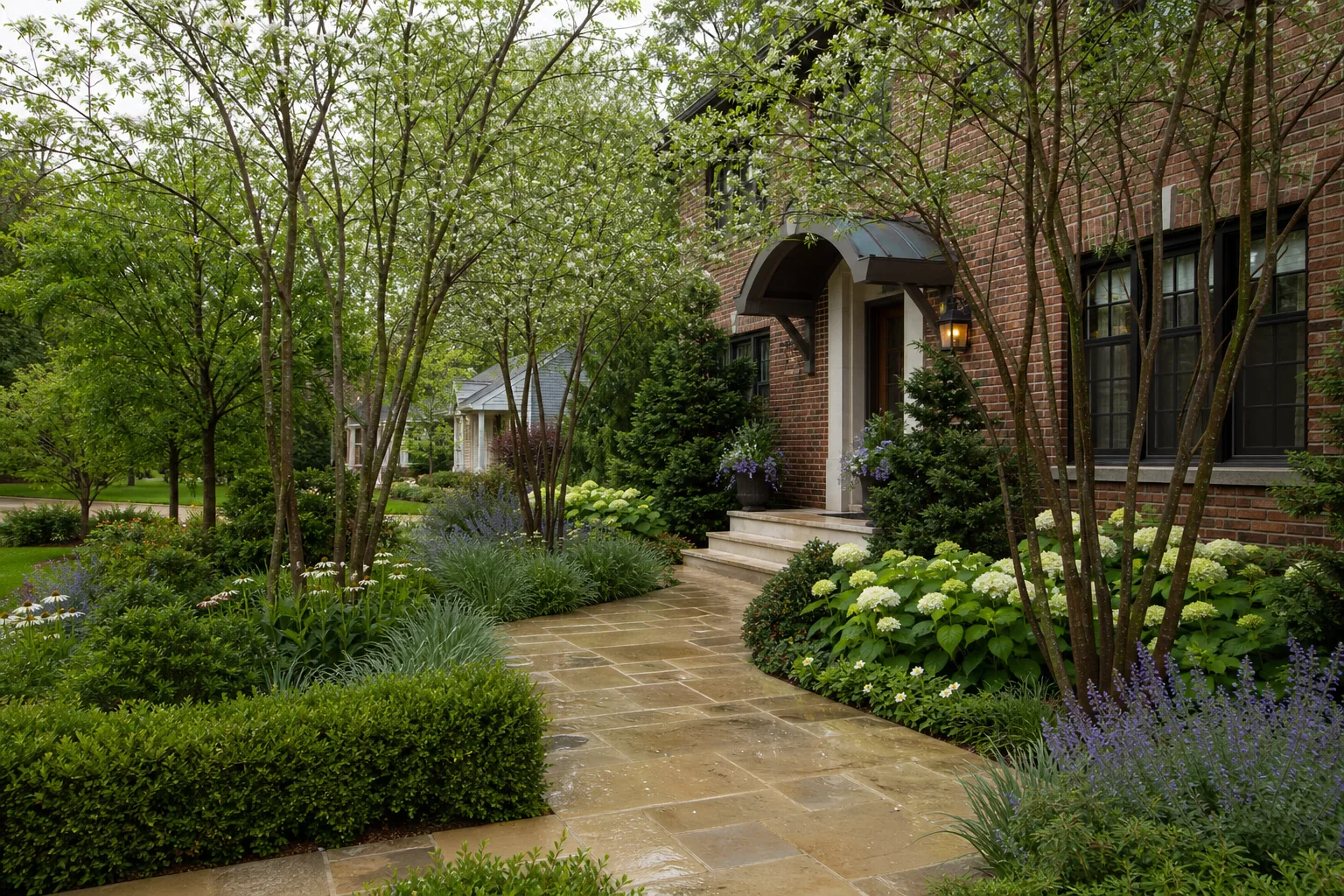
Document the pattern. Photograph the property during and after rain. Note storm duration, antecedent wetness, the first place water appears, how long it remains, and whether the pattern changes with frozen ground.
Separate symptoms from causes. Mulch movement, dead lawn, damp beds, icing, wall staining, settlement, and basement concerns may share a source—or may not.
Protect neighboring property. A project must not casually move a problem downhill, across a boundary, toward a public way, or into another system.
Know the professional boundary. Foundations, structural walls, significant flooding, municipal systems, disputed drainage, or complex grades may exceed landscape scope.
This content deliberately explains boundaries because false confidence around water can be expensive.
A website cannot make that claim. Basement water can involve grading, foundations, drainage systems, utilities, groundwater, plumbing, waterproofing, or other conditions requiring qualified diagnosis.
Routing, pipe type, cleanouts, freezing, settlement, outlet, erosion, utilities, code, and maintenance all require site-specific review.
Verified elevations, boundaries, easements, structures, and drainage relationships may be essential. The appropriate documentation depends on the project and jurisdiction.
No. They are fictional visual concepts and must not be used as design, drainage, structural, or construction guidance.