Establishment visits
Observation of water, stress, settling, weeds, staking, mulch, losses, and owner questions after installation.
Selective care for layered landscapes: establishment, pruning, editing, bed work, seasonal transitions, and targeted enhancements—not fictional promises of perfection.
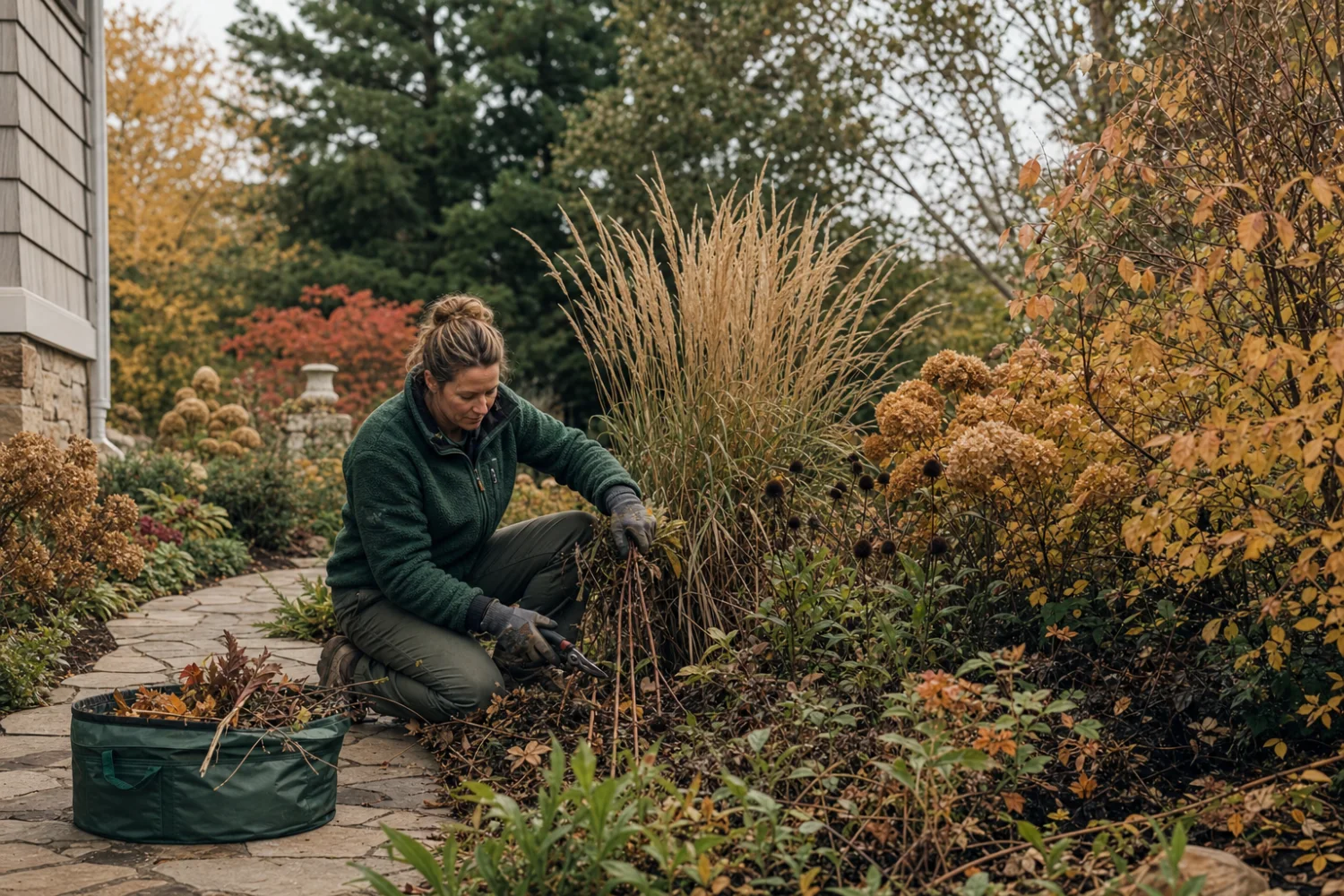
Designed gardens develop. Some plants need patience, some need editing, some need division, and some choices should be reconsidered as light, moisture, and use change.
Open the seasonal calendar →Observation of water, stress, settling, weeds, staking, mulch, losses, and owner questions after installation.
Timing and technique based on plant, season, purpose, structure, and real expertise.
Weeding, edging, mulch strategy, division, edits, soil surface, and keeping layers legible.
Spring editing, summer support, autumn decisions, and winter structure—without treating every stem alike.
Replacing misses, strengthening weak moments, adapting to changing shade, and extending seasonal interest.
Defined priorities for entrances, visibility, safety, seasonal deadlines, and coordination.
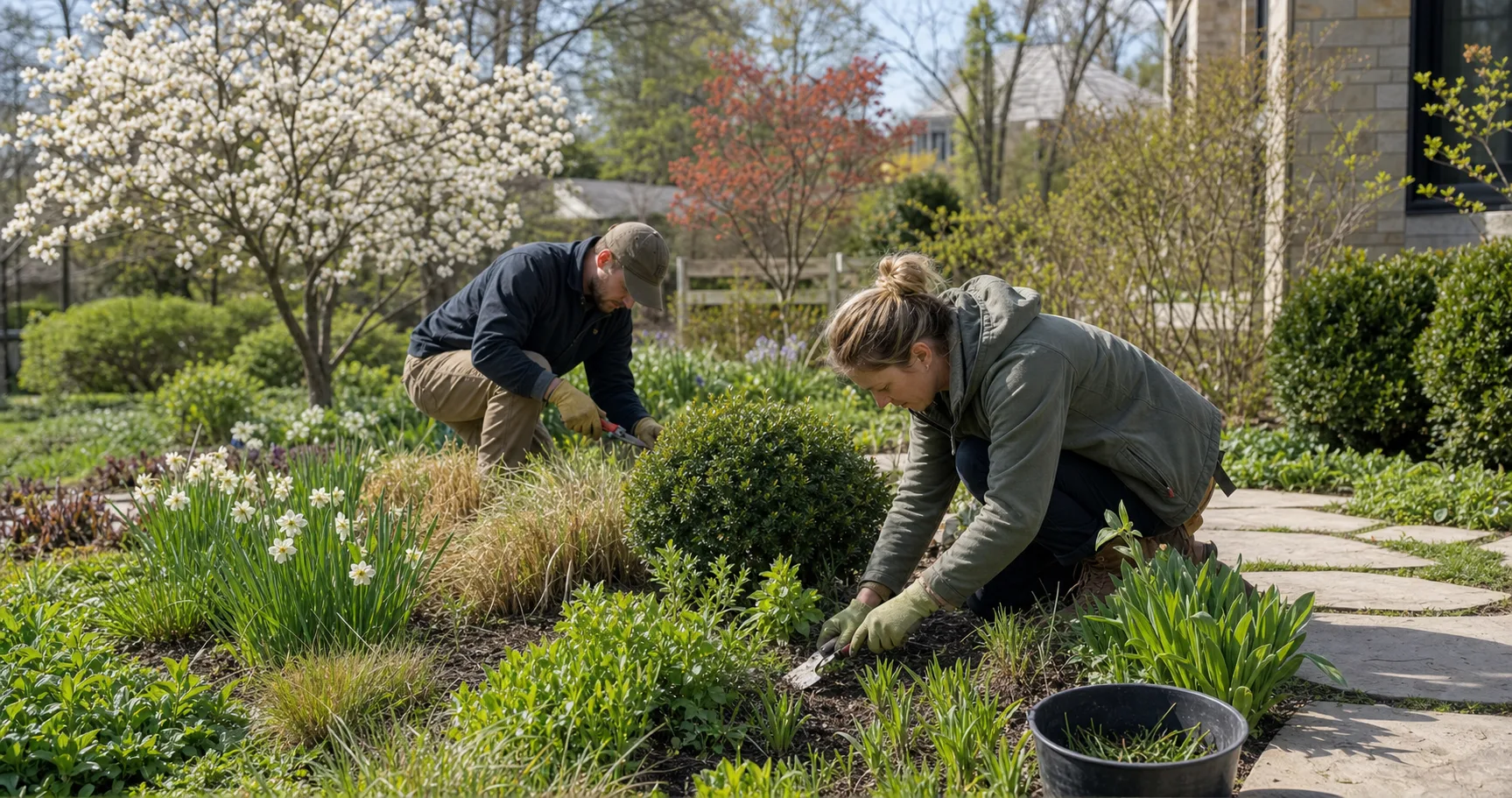
A designed garden benefits from people who can distinguish plants, understand the desired structure, and record how the landscape changes.
The service plan should define priorities, visits, exclusions, plant-health boundaries, communication, and who approves replacements or enhancements.
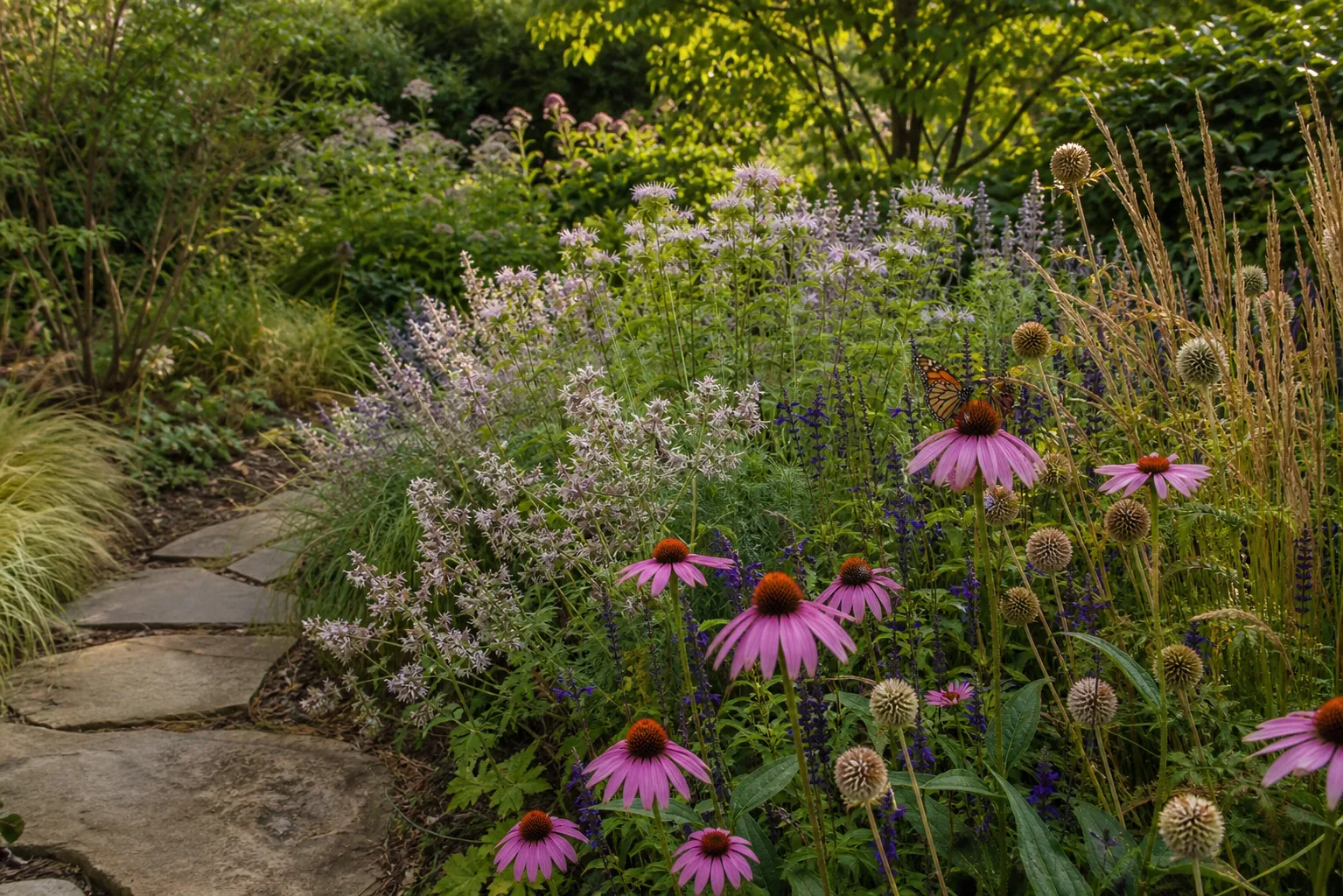
A real care agreement needs more detail than a promise to “keep it looking good.”
This fictional service is positioned around designed beds and selective care. A real provider must state whether lawn, irrigation, tree care, snow, or other work is included.
No single rule fits every plant, site, disease concern, appearance standard, habitat goal, or maintenance capacity.
Targeted edits can improve composition and performance, but some problems require redesign, drainage work, soil improvement, replacement, or changed expectations.
No pesticide authorization or capability is claimed. A real agreement must address licensing, products, notice, records, safety, and alternatives where applicable.